Introduction
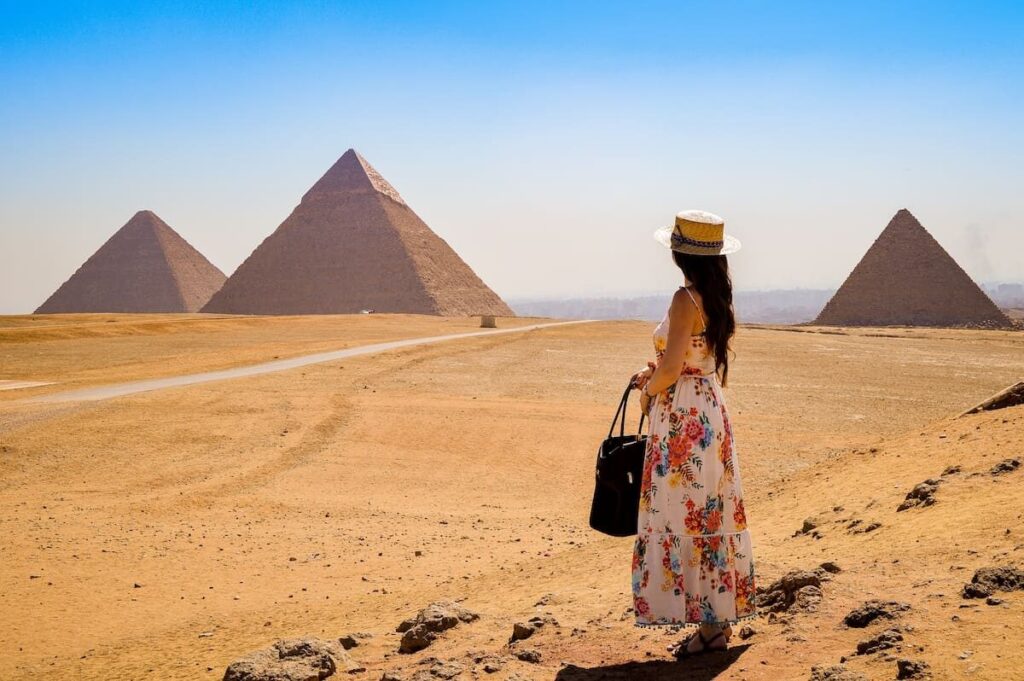
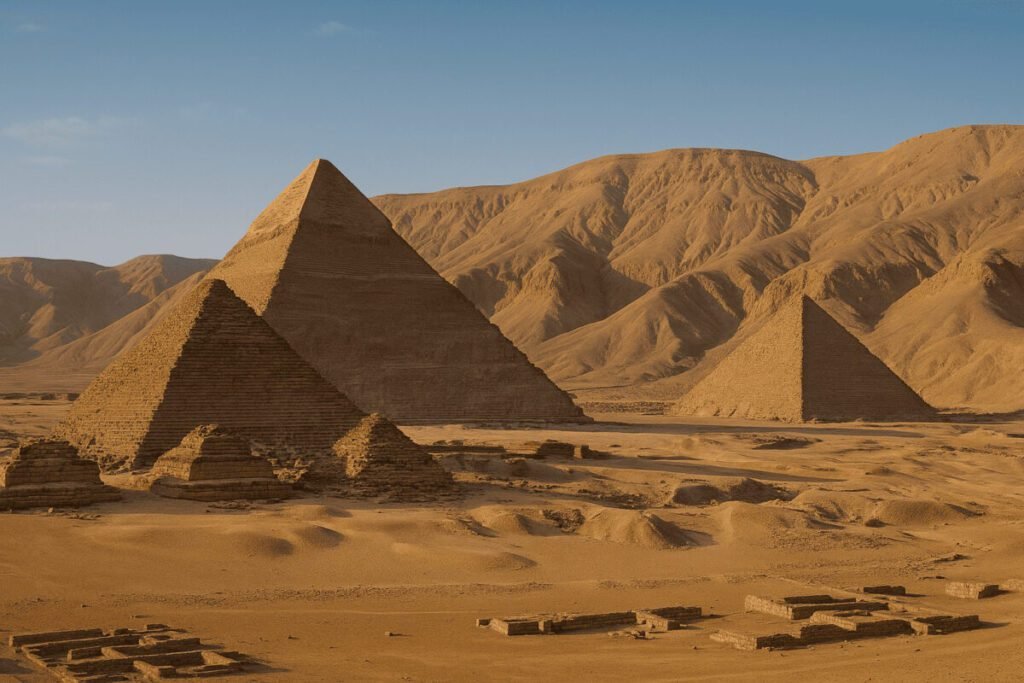
Was King Tut Buried in a Pyramid When visitors first arrive in Egypt, they often picture every pharaoh resting beneath a towering pyramid, like the famous ones at Giza. The pyramid, after all, has become the ultimate shorthand for Egypt in the modern imagination—a mountain of stone rising against the desert sky, guarding the eternal remains of a king.
But when Howard Carter uncovered Tutankhamun’s resting place in 1922, there was no pyramid looming above. Instead, the young pharaoh lay hidden in a modest rock-cut chamber in the Valley of the Kings. To many, this was a surprise: how could Egypt’s most famous burial not be in a pyramid at all?
The answer lies in a sweeping shift in ancient Egyptian beliefs and strategies. By Tut’s time in the New Kingdom, the pyramid had given way to something more discreet but no less symbolic: the hidden tomb carved into the Theban cliffs.
Key Point 1: The Evolution of Royal Tombs in Ancient Egypt
Was King Tut Buried in a Pyramid Think of Egyptian tombs as a kind of architectural diary—each design choice reflected not only engineering ambition but also shifting religious ideas and very practical concerns.
In the Old Kingdom, pharaohs built pyramids, colossal markers of power that soared toward the sun. These structures weren’t just tombs; they were cosmic symbols. The pyramid shape itself represented the sun’s rays and the primeval mound of creation. To the ancient mind, a pyramid was a stairway to the heavens, a beacon guiding the king’s soul to join the sun god Ra.
But monuments that big also carried a flaw: they were impossible to hide. Their grandeur invited robbers, and by the Middle Kingdom, most pyramids had been emptied of their treasures. Pharaohs had essentially built neon signs for their graves.
By the New Kingdom, rulers sought a new approach. They traded visibility for secrecy, carving tombs into the limestone cliffs of western Thebes, today known as the Valley of the Kings. It was a shift from declaring “Here I lie, mighty and eternal” to whispering “Hide me, so I may rest undisturbed.” This was the funerary world into which Tutankhamun was born.
Key Point 2: Tutankhamun’s Tomb in Context
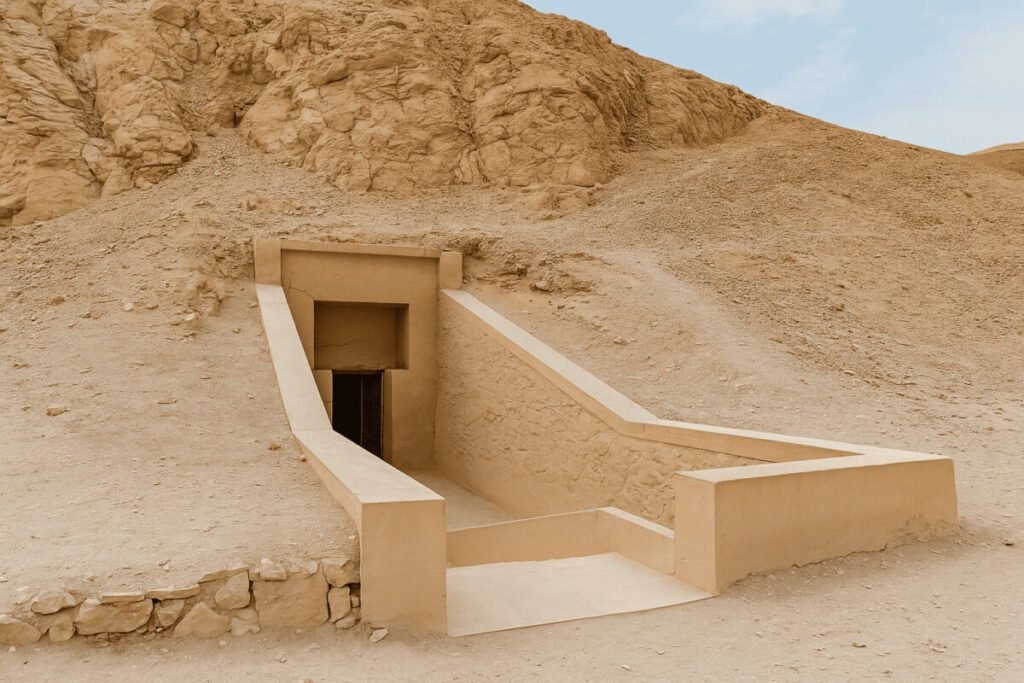
Tutankhamun’s tomb, catalogued as KV62, stands out not for its grandeur but for its modesty. Compared to the sprawling underground palaces of later pharaohs, his resting place is surprisingly small, with only a few chambers.
Why? Most scholars believe Tut’s death came suddenly, perhaps before a grander tomb could be completed. Many argue KV62 may have originally been intended for a court official, hastily repurposed for the young king.
Ironically, this smaller tomb may have saved it. Hidden deep in the Valley and overshadowed by larger royal burials, it escaped the worst of ancient looters. The result was the archaeological jackpot Carter stumbled upon—a time capsule bursting with over 5,000 objects that revealed not only Tut’s afterlife but also the everyday life of an Egyptian king.
Key Point 3: Why Not a Pyramid? The Strategic Logic
Abandoning the pyramid wasn’t laziness; it was strategy. Pharaohs of the New Kingdom understood that enormous monuments had become invitations for theft. In contrast, the Valley of the Kings offered natural concealment—steep cliffs riddled with hidden entrances.
There was also a spiritual shift at play. While pyramids aligned kings with the sun god Ra, the New Kingdom emphasized Osiris, lord of the underworld. Rock-cut tombs were decorated with elaborate guides like the Book of the Dead, maps and spells meant to navigate the afterlife’s dangers. The focus moved inward—from monumental exteriors to richly symbolic interiors.
And let’s not forget geography: the Theban cliffs themselves form a pyramid-like silhouette. The locals likely saw this natural formation as a cosmic symbol, a divine pyramid provided by the gods. Who needed stone when the landscape itself offered eternity?

Key Point 4: The Valley of the Kings – Egypt’s Hidden Necropolis
Tut’s resting place belongs to a grander experiment: the Valley of the Kings, established by Thutmose I. Here, pharaohs dug secret tombs, each decorated with stars, gods, and celestial journeys. Walking through these tombs today feels like stepping into a painted map of the cosmos, every wall alive with colour and myth.
Tutankhamun’s KV62 may be humbler, but it belongs to this lineage of hidden palaces. His burial chamber, with its golden shrines nested like Russian dolls, still reflects the New Kingdom’s obsession with safeguarding eternity—not by building high into the sky, but by burrowing deep into the earth.
Key Point 5: Symbolism of Burial Practices in Tut’s Time
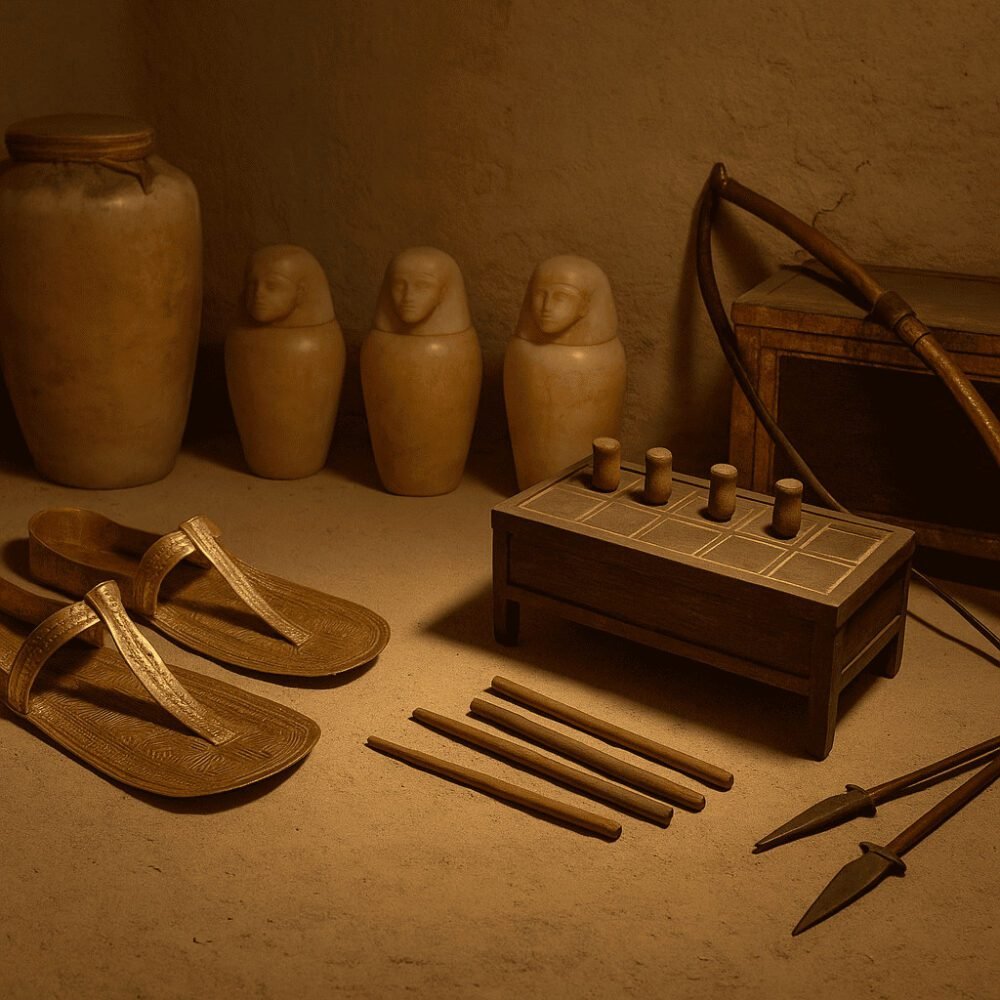
If pyramids shouted permanence, New Kingdom tombs whispered intimacy. They were less about impressing the living and more about guiding the dead. Tut’s tomb contained sandals for walking in the afterlife, food for sustenance, weapons for protection, and even games for leisure.
This philosophy shows us something profound: the Egyptians didn’t see death as a severing, but as a continuation. Life was simply being packed up and carried into another dimension. The tomb wasn’t just a grave—it was a launchpad for eternity.
Key Point 6: Modern Misconceptions – The Pyramid Myth
Ask a tourist today where King Tut is buried, and many still assume “in a pyramid.” Hollywood, textbooks, and postcards have welded the pyramid to the pharaoh in popular imagination. But Tutankhamun’s story helps correct that myth.
His burial highlights the evolution of Egyptian funerary traditions—proof that ancient Egypt wasn’t static but constantly reimagining its connection to gods, death, and eternity. Recognising this helps us appreciate not just the pyramids of Giza but also the hidden splendour of the Valley of the Kings, where Tut and many of his successors chose eternal rest.
Conclusion
So, was King Tut buried in a pyramid? No. He lay hidden in a modest tomb carved into the cliffs of the Valley of the Kings—a resting place born not of towering stone but of secrecy, symbolism, and spiritual change.
The shift from pyramid to hidden tomb reflects Egypt’s adaptability: from monuments that touched the sky to chambers that mapped the stars underground. Tutankhamun’s burial is part of that evolution, a reminder that Egypt’s genius lay not just in building wonders but in reinventing them.
Next time you stand before the pyramids at Giza, remember: they tell only the first chapters of Egypt’s funerary story. To see the ending, you must walk into the cliffs of Thebes, where a boy king once slept beneath painted stars—eternal not because of a pyramid, but because of the story his hidden tomb still tells.