Introduction
Discovery of Tutankhamuns Tomb in November 1922 remains one of the greatest moments in the history of archaeology. In the heart of Luxor’s Valley of the Kings, a weary British archaeologist named Howard Carter knelt before a sealed doorway after years of disappointment and near defeat. His financial backer, Lord Carnarvon, was prepared to end the project, and most experts believed the valley had already surrendered all its secrets.
Then fate intervened. Beneath the desert sands, a hidden staircase appeared, leading to a sealed tomb marked with the name of a long-forgotten boy king: Tutankhamun. Within days, Carter made history. When he peered through a small opening by candlelight and was asked if he could see anything, his reply—“Yes, wonderful things”—captured the imagination of the entire world and ignited a century-long fascination with Ancient Egypt.
This ultimate guide explores the Discovery of Tutankhamuns Tomb in detail: the relentless search, the drama of the opening, the treasures revealed, the global media frenzy that followed, and why this event still matters today—not only for Egyptology but for our wider understanding of history itself.
The Long Road to Discovery
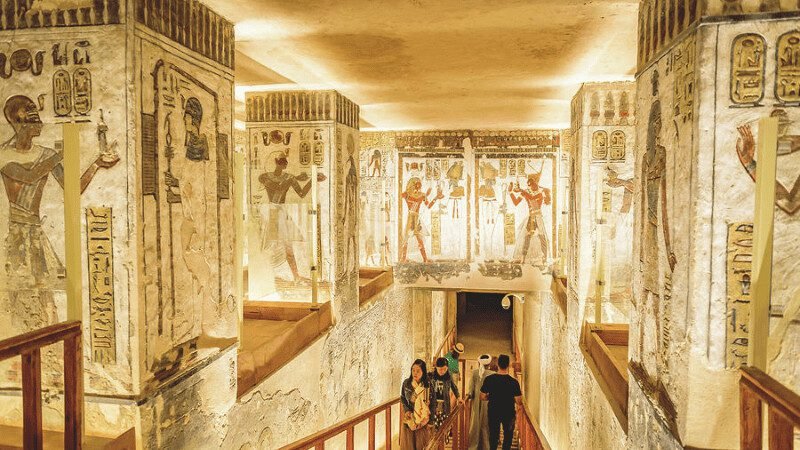
Discovery of Tutankhamuns Tomb was not a single moment of luck but the outcome of years of determination, failure, and persistence. Howard Carter began his search in the Valley of the Kings in 1914, firmly believing that the tomb of the boy king still lay hidden beneath the desert sands.
For nearly a decade, Carter faced disappointment. Excavations revealed little more than broken pottery and abandoned tools, while critics dismissed his efforts as a waste of time. Lord Carnarvon, his financial backer, grew frustrated and warned that 1922 would be the final season of support.
Just as hope was slipping away, Carter’s team uncovered the top step of a staircase buried under rubble. That single find marked the beginning of the path that would lead to the Discovery of Tutankhamuns Tomb, changing archaeology forever.
The First Glimpse Inside KV62
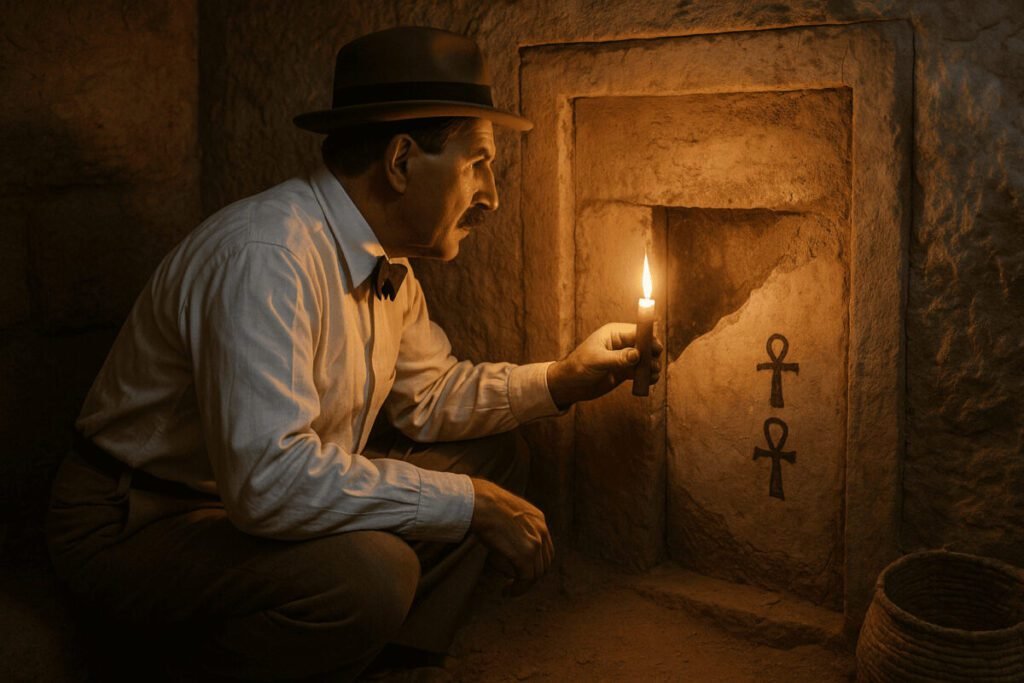
Discovery of Tutankhamuns Tomb reached its climax on November 26, 1922, when Howard Carter stood before the sealed doorway that had haunted his imagination since the first steps were uncovered. With Lord Carnarvon, his daughter Lady Evelyn, and a small team gathered close, Carter chiselled a tiny hole into the plaster.
He lit a candle and pressed his eye to the gap. At first, the darkness consumed the flame. Then, slowly, extraordinary shapes emerged: gilded couches carved as animals, alabaster vases shimmering in the light, and statues with inlaid eyes that seemed to stare back through time. The objects were stacked in a haphazard manner, as if hurriedly packed, yet the sheer abundance was breathtaking.
Unable to restrain himself, Lord Carnarvon asked, “Can you see anything?” Carter’s trembling reply—“Yes, wonderful things”—became the most famous words in the history of archaeology.
Unlike so many tombs in the Valley of the Kings, which had been looted centuries earlier, Tutankhamun’s resting place was nearly untouched. It felt as though the young pharaoh had been buried only yesterday, safeguarded by the desert until the modern world was ready to uncover him.
For Egyptology, this was the ultimate dream: a complete royal burial preserved almost in its entirety. For the wider world, it was the beginning of a story that fused archaeology, mystery, and wonder like no other discovery before it.
The World of 1922 — Why Timing Was Everything
The discovery of Tutankhamun’s tomb didn’t happen in a vacuum. The world of 1922 was a place still scarred by the First World War. Millions of people had lost loved ones, and nations were struggling to recover from both grief and economic hardship. In such a climate, stories of destruction and despair dominated the headlines. What the world craved was a spark of wonder—proof that beauty and mystery still existed.
Tutankhamun provided exactly that. The timing of the discovery was perfect for a weary global audience. Newspapers seized on the story, splashing images of golden treasures across their front pages. For many, it was the first time they had ever seen such vivid photographs of ancient artefacts. The contrast was stark: instead of war-torn Europe, readers were transported to the shimmering splendour of a pharaoh’s tomb.
There was another reason why 1922 mattered: mass media had matured. Photography, telegrams, and radio carried news faster and further than ever before. Carter’s find was among the first major archaeological discoveries to be broadcast to a truly global audience almost in real time. Suddenly, Tutankhamun was no longer a forgotten name in hieroglyphs—he was a celebrity, a boy king whose treasures were admired in living rooms from London to New York to Tokyo.
The discovery wasn’t just about objects buried in the sand. It was about timing, technology, and storytelling. In 1922, Tutankhamun became more than a historical figure—he became a symbol of hope, beauty, and the endurance of human creativity in a world desperate for such reminders.
The Media Frenzy & the Birth of Tut-mania
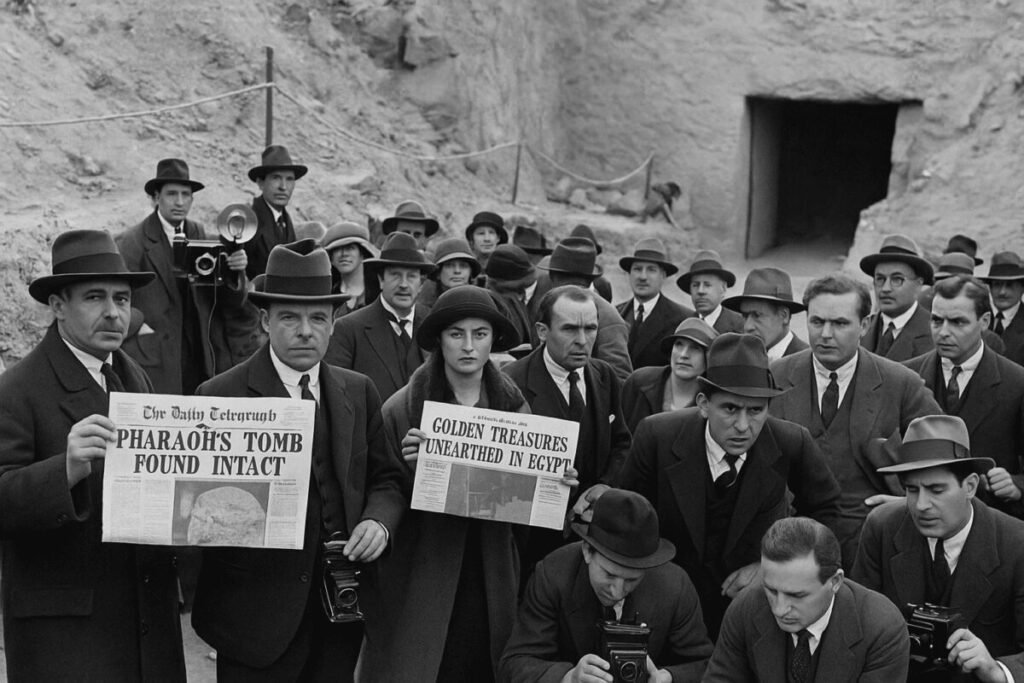
Almost overnight, the Valley of the Kings became the centre of the world’s attention. Journalists, photographers, and adventurers flocked to Luxor, eager for any detail they could print. Newspapers ran daily stories, their headlines breathless with excitement: “Pharaoh’s Tomb Found Intact!” and “Golden Treasures Unearthed in Egypt!”
For the first time, archaeology had crossed into popular culture. The public wasn’t just reading about the past—they were living it through photographs and vivid reporting. Images of gilded shrines and strange funerary statues fascinated readers who had never seen such artistry. The tomb of a relatively minor king became the most famous burial in history.
Then came the “curse.” When Lord Carnarvon died unexpectedly in April 1923 from an infected mosquito bite, newspapers leapt on the story. They claimed the tomb carried a warning: “Death shall come on swift wings to him who disturbs the peace of the king.” Though no such inscription was ever found in Tutankhamun’s tomb, the myth stuck. Every mishap connected to the excavation—illnesses, accidents, even a pet canary killed by a cobra—was woven into the legend.
The result was nothing short of hysteria. Egypt’s antiquities were splashed across postcards, fashion borrowed Egyptian motifs, and even films began incorporating pharaohs and curses into their plots. This wave of fascination became known as Tut-mania, a cultural phenomenon that reached far beyond academia.
The discovery of Tutankhamun’s tomb was no longer just about archaeology. It was theatre. It was mystery. It was a story so sensational that the world simply couldn’t look away.
Why the Discovery Mattered for Egyptology
Before 1922, much of archaeology in Egypt was closer to treasure hunting than to science. Tombs were often looted for their gold or prized artefacts, with little concern for context or preservation. Carter’s discovery of Tutankhamun’s tomb changed that forever.
For the first time, archaeologists had the chance to study a nearly intact royal burial. More than 5,000 objects were painstakingly documented, drawn, and photographed before removal. Every jar, amulet, and fragment of fabric was catalogued in relation to where it was found. This meticulous process, although slow, set a new standard: archaeology was not just about finding treasures but about preserving knowledge.
The discovery also exposed bigger questions: Who owns the past? At the time, Egypt was still under British influence, and many assumed the treasures might be divided or sent abroad. But Egypt asserted its rights, insisting that Tutankhamun’s legacy remain in the country. This debate helped shape modern cultural heritage laws and inspired a sense of national pride for Egyptians, who saw Tut not just as a pharaoh, but as a symbol of their identity.
In short, the tomb of Tutankhamun transformed Egyptology from an adventurous pastime into a more disciplined science. It also reshaped the politics of archaeology, ensuring that the treasures of Egypt would stay inHow to Personalize Your Egypt Adventure: Insider Tips for Tailor-Made Travel Egypt.
Why It Still Matters Today
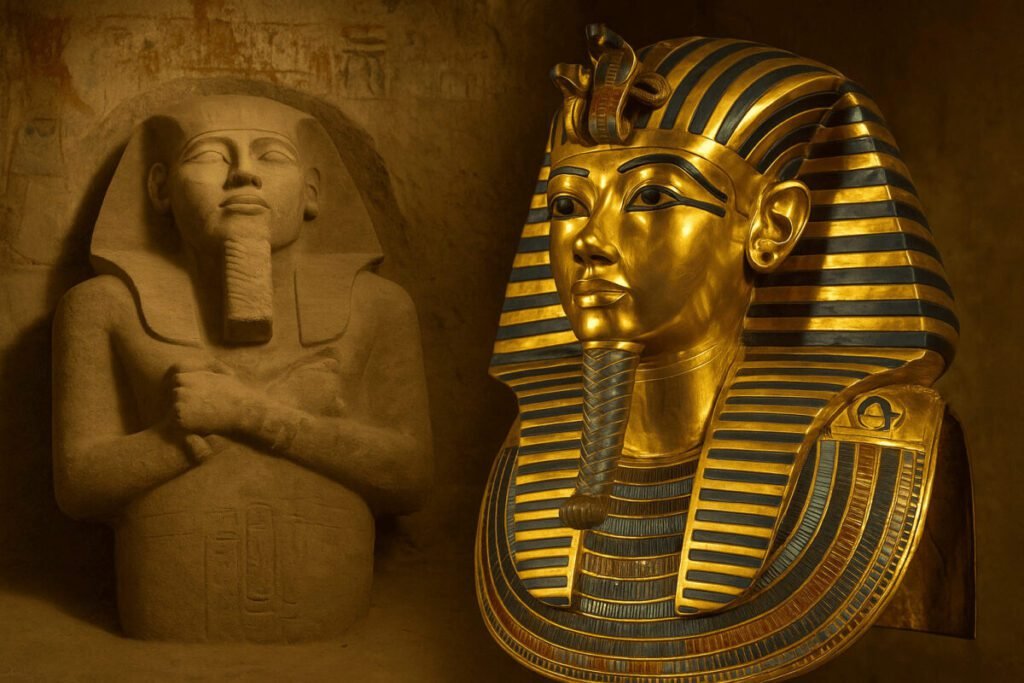
More than a century later, the discovery of Tutankhamun’s tomb still resonates. His golden mask remains one of the most recognisable artefacts in the world, a symbol not just of Ancient Egypt but of human civilisation itself. But the significance goes far beyond the glitter of gold.
Tourism & National Identity
Tutankhamun became the face of modern Egypt. His treasures filled museums, drew millions of visitors, and turned Luxor and Cairo into must-see destinations. Today, his mummy rests in KV62 in the Valley of the Kings, while his treasures are displayed at the Grand Egyptian Museum near the Pyramids of Giza. For travellers, seeing Tut is often the highlight of their journey through Egypt.
Science & Technology
The discovery didn’t end in 1922—it continues today. Modern CT scans and DNA analysis of Tut’s mummy have revealed insights into his health, genetic background, and possible causes of death. New conservation methods are preserving fragile artefacts for future generations. Each breakthrough adds to the value of Carter’s find, proving that the tomb is still a living laboratory of knowledge.
Culture & Imagination
From films like The Mummy to fashion inspired by Egyptian motifs, Tutankhamun’s tomb left a permanent mark on culture. The “curse” may have been media invention, but it ensured Tut’s legend reached every corner of the world. In classrooms, books, and documentaries, Tut remains the doorway through which millions first encounter Ancient Egypt.
Global Legacy
Perhaps most importantly, the 1922 discovery proved the enduring power of archaeology itself. In a century scarred by war and upheaval, Tut’s tomb reminded the world that beneath the sands of history, wonders still wait to be found. That lesson continues to inspire explorers, scientists, and dreamers today.
Conclusion
The discovery of Tutankhamun’s tomb in 1922 was more than the unsealing of a pharaoh’s resting place. It was the unsealing of a story that belongs to all humanity—a story of perseverance, chance, and wonder.
Howard Carter’s persistence revealed not only treasures but also a forgotten boy king whose fame would outshine that of Egypt’s greatest rulers. The find reshaped archaeology, fuelled national pride, ignited global fascination, and continues to drive scientific study and cultural imagination.
Why does it matter? Because it proves that history is not static. The sands of Egypt still whisper secrets, waiting for those patient and determined enough to listen. Tutankhamun’s tomb is valuable not simply because of the gold inside, but because it bridges worlds: ancient and modern, local and global, past and future.
A century on, the “wonderful things” Carter glimpsed by candlelight remain just as wonderful today.