Introduction
Where Is Tutankhamun Now? For a century, Tutankhamun has captured the world’s imagination. Yet many travellers still wonder where they can actually see the boy king today. The answer isn’t as straightforward as you might think. His story is divided between two cities: Luxor, where his mummy still rests in the Valley of the Kings, and Cairo, where most of his treasures are displayed.
For those planning a trip to Egypt, knowing what you’ll find in each location makes all the difference. This guide will show you exactly where Tutankhamun is now—and how to experience his legacy in both Luxor and Cairo.
Where Is Tutankhamun Now in Luxor?
If you want to stand in the presence of Tutankhamun himself, the answer to Where Is Tutankhamun Now begins in KV62, his tomb in the Valley of the Kings in Luxor.
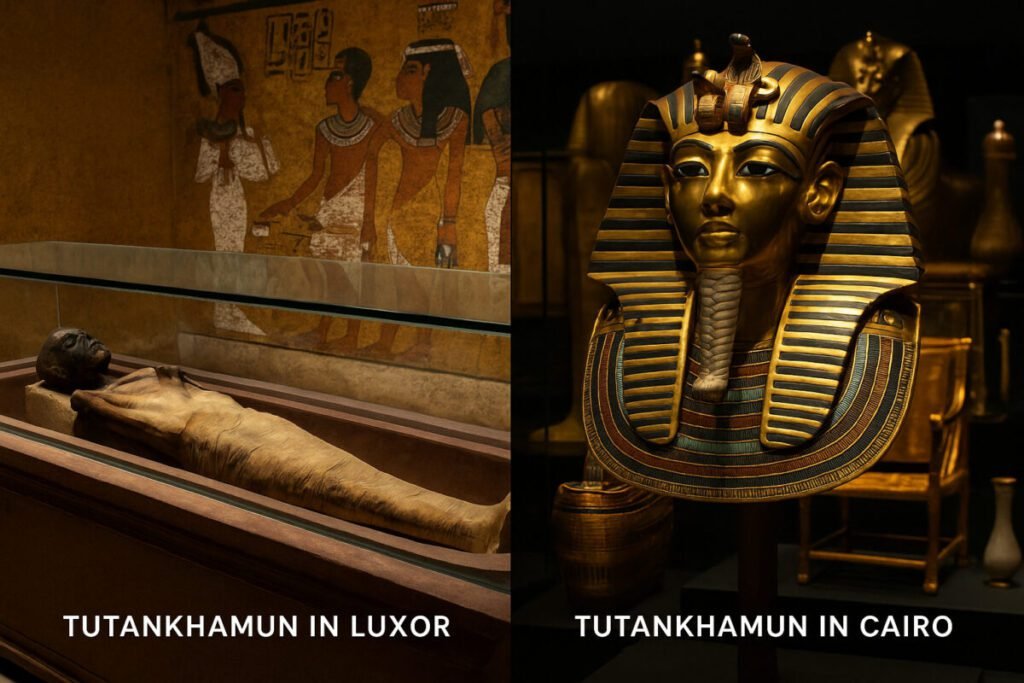
Inside the burial chamber, behind the golden shrines that once enclosed him, lies the mummified body of the boy pharaoh. Today, Tutankhamun’s remains are displayed in a climate-controlled glass case to protect them from decay. Seeing his fragile form is an intimate, almost haunting moment—very different from the dazzling gold treasures often linked with his name.
What you’ll see in Luxor:
Tutankhamun’s mummy in situ inside KV62.
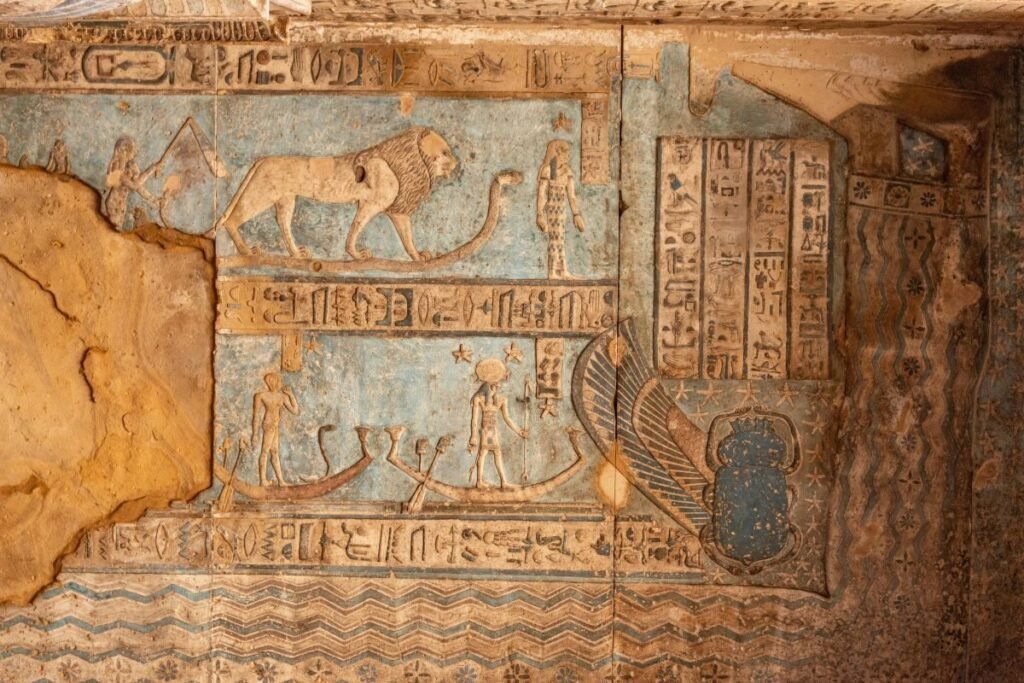
The modest burial chamber, its walls painted with scenes of the afterlife.
A few contextual objects left behind, though the treasures are in Cairo.
For many travellers, this encounter is the most powerful of all. It’s not about splendour or treasure, but about meeting the boy king face to face.

Tutankhamun in Cairo: The Treasures of a Pharaoh
While the king himself remains in Luxor, almost everything else found in his tomb has been moved to Cairo. For decades, his treasures were displayed in the Egyptian Museum in Tahrir Square, where millions came to marvel at the golden mask, gilded coffins, and intricate jewellery.
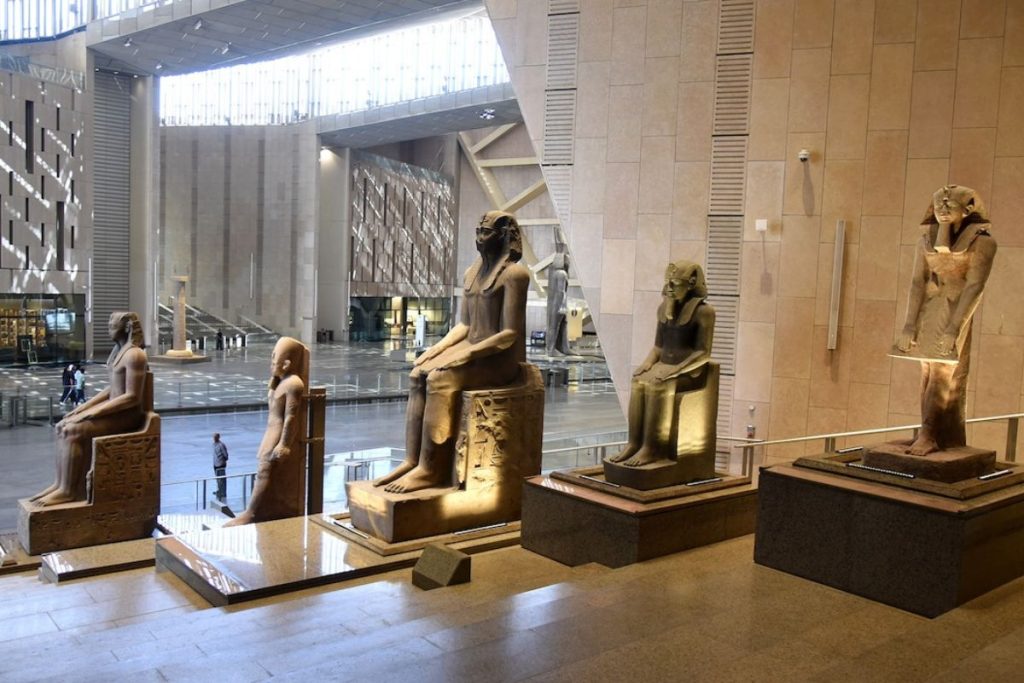
Now, a new chapter is unfolding at the Grand Egyptian Museum (GEM), near the Pyramids of Giza. Here, for the first time, Tutankhamun’s full burial collection of over 5,000 objects will be shown together in one dedicated wing. Visitors will be able to walk through galleries designed to mirror the tomb itself, moving from everyday objects like sandals and toys to the iconic golden mask that became his eternal image.
What you’ll see in Cairo:
- The golden mask—Egypt’s most famous treasure.
- Tut’s nested coffins, chariots, thrones, and weapons.
- Personal items: sandals, clothing, board games, and even jars of wine.
- The reconstructed story of his short life and mysterious death.
If Luxor shows you the king as he was laid to rest, Cairo reveals how he lived—and how his people prepared him for eternity.
Why the Separation?
Some visitors wonder why Tutankhamun wasn’t reunited with his treasures. The decision reflects a balance between respect and preservation.
- His body was left in Luxor, to rest in the place where he was originally buried, as an act of reverence.
- His treasures were moved to Cairo both for safekeeping and to allow millions of visitors to see them without damaging the fragile tomb.
This separation also highlights two different experiences: in Luxor, the quiet intimacy of the tomb; in Cairo, the grandeur and artistry of ancient craftsmanship. Together, they tell a complete story.
Planning Your Visit: Luxor vs. Cairo
- In Luxor: Visit KV62 in the Valley of the Kings. Expect a smaller chamber compared to other royal tombs, but the chance to see Tut’s mummy makes it unforgettable.
- In Cairo: Visit the Grand Egyptian Museum for the full collection. Allocate several hours—it’s more than a display, it’s a journey through every object that once surrounded the boy king.
- For the complete Tutankhamun experience, you’ll want to see both. Luxor gives you the king himself, while Cairo shows you his world.
Conclusion
So, where is Tutankhamun now? The answer lies in two extraordinary places. In Luxor, his body still rests in KV62, a quiet reminder of a young life cut short. In Cairo, his treasures dazzle visitors at the Egyptian Museum and the Grand Egyptian Museum, ensuring his legacy endures as one of the most recognisable figures in history.