The Curse of King Tut’s Tomb: Unraveling the Myths and Supernatural Guardians of Egyptian Pharaohs
On April 5, 1923, just five months after witnessing the opening of King Tutankhamun’s burial chamber, Lord Carnarvon—the wealthy English aristocrat who funded the excavation—died suddenly in Cairo. His death from an infected mosquito bite sparked a media frenzy that would forever link the curse of King Tut’s tomb to Egyptian pharaohs and their supposed supernatural vengeance from beyond the grave.
The timing seemed too coincidental to ignore. Within hours of Carnarvon’s death, Cairo’s electricity mysteriously failed, and back in England, his beloved dog howled and died at the exact moment of his master’s passing. Newspapers worldwide seized upon these eerie coincidences, transforming what should have been archaeology’s greatest triumph into a tale of ancient curses and otherworldly retribution.
But what lies beneath these sensational stories? Are the curses real supernatural phenomena, or elaborate myths built upon coincidence and media sensationalism? This investigation delves deep into the world of Egyptian tomb curses, examining the historical reality behind tomb robbers, egyptian pyramids, the sophisticated egyptian tomb traps designed to protect pharaohs’ treasures, and the mythological egyptian tomb guardians that were believed to watch over the dead for eternity.
From ancient egyptian tomb robbers who faced real dangers in their pursuit of gold and precious artifacts, to modern egyptian tomb raiders who continue to threaten archaeological sites, we’ll separate fact from fiction in one of history’s most enduring supernatural mysteries.
The Origins of Egyptian Tomb Curses and Supernatural Beliefs
Why NMEC Will Blow YouAncient Egyptian Death Culture and Afterlife Protectionr Mind
The ancient Egyptians possessed one of history’s most sophisticated understandings of death and the afterlife. To them, death was not an ending but a transformation—a journey through the underworld that required extensive preparation and protection. The concept of curses protecting tombs didn’t emerge from superstition alone but from deeply held religious beliefs about the sanctity of burial sites and the continued existence of the deceased.
The Book of the Dead, perhaps ancient Egypt’s most famous funerary text, contained hundreds of spells designed to guide and protect the deceased through their afterlife journey. These weren’t mere words on papyrus but powerful incantations believed to have real supernatural force. Tomb walls were covered with similar protective spells, creating what Egyptians considered impenetrable barriers against both spiritual and physical threats.
Pharaohs, viewed as living gods, required even more elaborate protection. Their tombs weren’t simply burial sites but sacred temples where the divine king’s spirit would reside for eternity. Any disturbance to these holy places was considered not just theft but blasphemy against the gods themselves—a crime that would bring swift divine retribution
Archaeological Evidence of Curse Inscriptions
Modern archaeology has uncovered numerous examples of actual curse inscriptions in Egyptian tombs, proving that the ancients did indeed attempt to protect their burial sites through supernatural threats. However, these authentic curses differ significantly from the dramatic Hollywood versions most people imagine.
One of the most famous genuine curse inscriptions was discovered in the mastaba tomb of Khentika Ikhekhi at Saqqara. The hieroglyphic text reads: “As for all men who enter this my tomb… impure… there will be judgment… an end shall be made for him… I shall seize his neck like a bird… I shall cast the fear of myself into him.”
Another authentic curse, found in the tomb of Ankhtifi at Mo’alla, warns: “Any ruler who… shall do evil or damage to this coffin and to this tomb: may the crocodile be against him in water, and the snake be against him on land. May he who does anything evil to my tomb never reach the necropolis.”
These inscriptions reveal the true purpose of ancient curses: they were psychological deterrents designed to frighten potential tomb robbers rather than supernatural weapons with actual mystical power. The ancients understood that superstition could be as effective as physical barriers in protecting their treasures.
Egyptian Tomb Guardians: Mythological and Physical Protectors
The concept of egyptian tomb guardians extended far beyond simple curse inscriptions. Ancient Egyptian burial practices incorporated multiple layers of supernatural protection, each designed to guard different aspects of the deceased’s afterlife journey.
Anubis, the jackal-headed god of mummification and the afterlife, served as the primary protector of burial sites. Statues and paintings of Anubis were placed strategically throughout tombs, particularly near entrances and burial chambers. The god was believed to personally guard against intrusion and to guide the deceased safely through the underworld.
Shabti figures—small mummiform statues placed in tombs—served as magical servants for the deceased but also functioned as guardians. These figures were inscribed with spells that would animate them in the afterlife, creating an army of supernatural protectors surrounding the pharaoh’s mummy.
The four Sons of Horus—Imsety, Duamutef, Hapi, and Qebehsenuef—guarded the canopic jars containing the deceased’s organs. Each son protected a specific organ and was associated with a particular cardinal direction, creating a protective perimeter around the burial chamber.
Physical guardian elements included elaborate false doors designed to confuse evil spirits, protective amulets placed throughout the tomb, and carefully positioned magical objects that were believed to activate automatically when threatened. These elements worked together to create what Egyptians viewed as an impenetrable supernatural fortress.
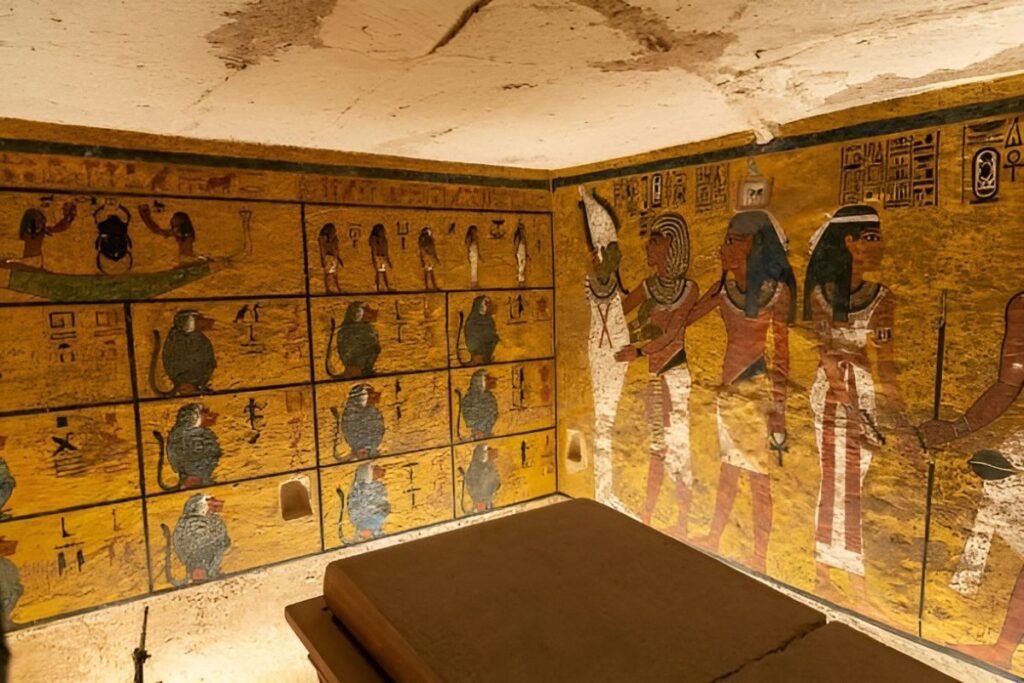
King Tutankhamun's Tomb: The Most Famous Curse in History
The 1922 Discovery by Howard Carter and Lord Carnarvon
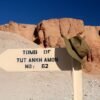
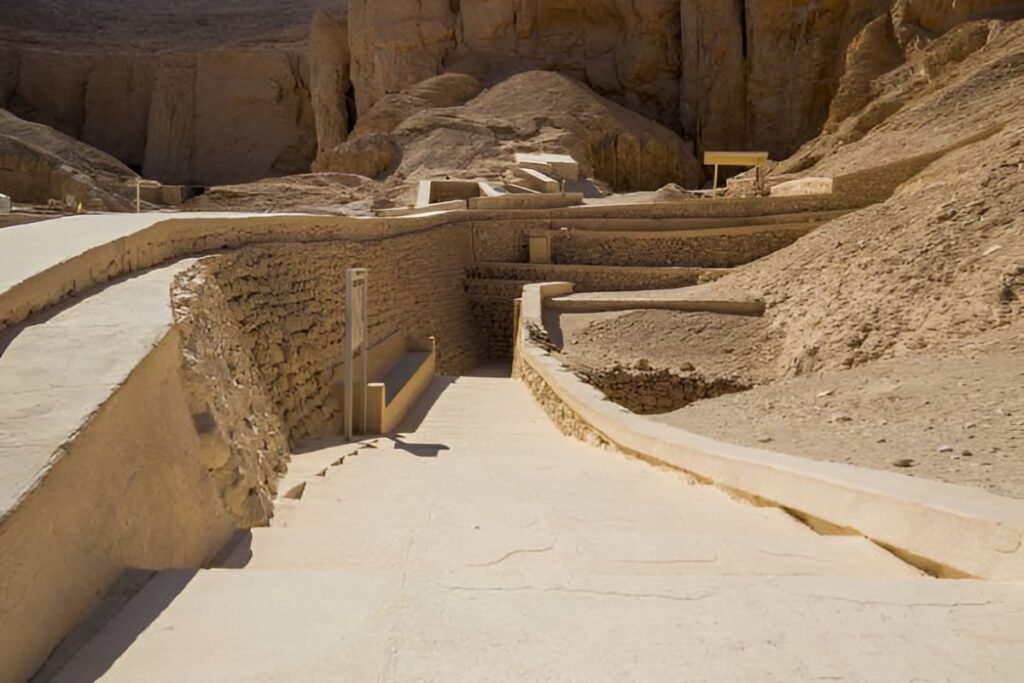
November 4, 1922, marked one of archaeology’s greatest moments when Howard Carter’s team discovered the first step leading to King Tutankhamun’s tomb in the Valley of the Kings. After years of fruitless searching, Carter had been ready to abandon the excavation when his water boy stumbled upon a stone step hidden beneath ancient workers’ huts.
The discovery process unfolded with agonizing precision. Carter and his patron, Lord Carnarvon, carefully excavated the stairway, revealing a sealed doorway bearing Tutankhamun’s royal cartouche. On November 26, Carter famously peered through a small hole in the door and, when asked what he could see, replied: “Wonderful things.”
The tomb contained over 5,000 artifacts crammed into four small rooms—the most complete pharaonic burial ever discovered. Unlike other royal tombs that had been thoroughly plundered by ancient tomb robbers egyptian pyramids style, Tutankhamun’s burial remained largely intact, offering an unprecedented glimpse into ancient Egyptian funerary practices.
The media attention was immediate and intense. Newspapers worldwide covered every detail of the excavation, and public fascination reached fever pitch when Carter opened the nested golden coffins to reveal the pharaoh’s intact mummy. The stage was perfectly set for the curse legend that would soon follow.
The Supposed Victims of King Tut's Curse
Lord Carnarvon’s death on April 5, 1923, became the cornerstone of the curse of king tut’s tomb egyptian pharaohs legend. The 57-year-old earl had been in poor health for years following a serious car accident in 1901, but the timing of his death—just months after the tomb’s opening—seemed too convenient for coincidence.
The circumstances surrounding Carnarvon’s death added to the mystery. He died from blood poisoning after an infected mosquito bite, a common enough occurrence in 1920s Egypt, but reports of strange phenomena began surfacing immediately. Cairo’s power grid allegedly failed at the moment of his death, though no official records confirm this claim. Back at his English estate, Carnarvon’s dog supposedly howled and died simultaneously with his master’s passing.
Media outlets quickly compiled a list of other supposed curse victims. Arthur Mace, the Metropolitan Museum of Art archaeologist who helped Carter break down the sealed door, died in 1928 from arsenic poisoning—though he had been seriously ill for years before the tomb’s discovery. George Jay Gould, an American financier who visited the tomb, died of pneumonia shortly after his trip to Egypt.
The list grew to include Archibald Douglas Reid, the radiologist who X-rayed Tutankhamun’s mummy, and Hugh Evelyn-White, a British archaeologist who allegedly left a note saying “I have succumbed to a curse” before committing suicide. By 1929, newspapers claimed that 22 people connected to the tomb’s discovery had died under mysterious circumstances.

Modern Scientific Explanations
Contemporary research has thoroughly debunked the supernatural explanations for these deaths, revealing far more mundane but scientifically fascinating causes. The primary culprit wasn’t an ancient curse but microscopic organisms that had been sealed inside the tomb for over 3,000 years.
Aspergillus flavus and other toxic mold species were discovered throughout Tutankhamun’s tomb when modern microbiologists examined samples in the 1990s. These organisms produce aflatoxins, powerful carcinogens that can cause liver damage, respiratory problems, and compromised immune systems. Anyone spending extended time in the tomb’s confined spaces would have been exposed to dangerous concentrations of these toxins.
Bacterial contamination posed another serious threat. Ancient mummies and organic burial materials created perfect breeding grounds for harmful bacteria that could cause infections, respiratory illness, and other health complications. The tomb’s sealed environment concentrated these biological hazards to dangerous levels.
Ammonia gas from decomposing organic materials would have created additional health risks, particularly for individuals like Lord Carnarvon who already suffered from respiratory problems. The combination of poor ventilation, concentrated toxins, and pre-existing health conditions created a perfect storm for medical emergencies.
Psychological factors also played a significant role. The stress of managing a high-profile excavation, dealing with international media attention, and working in challenging conditions took a toll on expedition members’ health. Confirmation bias led people to attribute normal illnesses and accidents to supernatural causes, creating a self-perpetuating cycle of curse belief.
Media Sensationalism and Cultural Impact
The curse of king tut’s tomb egyptian pharaohs phenomenon owes much of its lasting power to 1920s media sensationalism. Newspapers discovered that curse stories sold papers far better than dry archaeological reports, leading to increasingly dramatic coverage that bore little resemblance to factual events.
Arthur Weigall, a British Egyptologist and journalist, played a crucial role in promoting the curse narrative. After witnessing Lord Carnarvon’s cavalier attitude toward the tomb’s sacred nature, Weigall reportedly predicted that the earl wouldn’t survive the year. When Carnarvon died months later, Weigall’s prediction was cited as evidence of the curse’s power.
The story gained additional momentum from Sir Arthur Conan Doyle, creator of Sherlock Holmes, who publicly endorsed the supernatural explanation for Carnarvon’s death. Doyle’s reputation as a master of logical deduction lent credibility to the curse theory, despite his well-known fascination with spiritualism and the occult.
Hollywood quickly capitalized on the public’s fascination with Egyptian curses. Boris Karloff’s 1932 film “The Mummy” established many of the curse tropes that persist today, while countless subsequent movies reinforced the connection between ancient Egyptian tombs and supernatural vengeance. These cultural representations became so pervasive that many people today cannot separate Hollywood fiction from archaeological fact.
Egyptian Tomb Robbers Throughout History
Tomb Robbers Egyptian Pyramids: Ancient vs. Modern Thieves
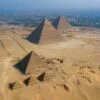
The relationship between tomb robbers and egyptian pyramids stretches back nearly as far as the pyramids themselves. Archaeological evidence suggests that many royal tombs were plundered within decades or centuries of their construction, making tomb robbery one of ancient Egypt’s most persistent crimes.
Ancient egyptian tomb robbers operated with surprising sophistication. Rather than random vandalism, tomb robbery was often an organized profession requiring specialized knowledge of burial practices, tomb construction, and valuable artifacts. Robbers needed to understand hieroglyphic inscriptions to locate hidden chambers, recognize valuable materials among burial goods, and navigate complex tomb layouts designed to confuse intruders.
The Great Pyramid of Giza shows clear evidence of ancient robbery attempts. The so-called “Robbers’ Tunnel,” a roughly hewn passage that bypasses the pyramid’s original entrance, demonstrates that ancient thieves possessed detailed knowledge of the structure’s internal layout. Similar evidence exists at virtually every major pyramid site, suggesting that tomb robbery was endemic throughout Egyptian history.
Modern egyptian tomb raiders face different challenges but share the same basic motivation: valuable artifacts that command high prices on international antiquities markets. Contemporary thieves use power tools, explosives, and sophisticated equipment to penetrate tomb defenses that stymied their ancient counterparts. However, they also face modern security measures, international law enforcement, and advanced archaeological documentation that makes their crimes easier to detect and prosecute.
Methods and Motivations of Egyptian Tomb Robbers
Egyptian tomb robbers throughout history have been driven primarily by economic necessity rather than supernatural curiosity. Ancient Egypt’s extreme wealth disparity meant that a successful tomb robbery could provide enough gold and precious objects to support a family for generations, making the risks worthwhile despite severe legal penalties.
Ancient robbers typically operated in organized gangs with specialized roles. Scouts identified promising tomb sites and surveillance patterns, while diggers handled the physical labor of breaking into burial chambers. Specialists in metalworking and jewelry could quickly identify and extract the most valuable artifacts, while fences provided connections to corrupt officials and international traders willing to purchase stolen goods.
The robbers’ methods evolved alongside tomb security measures. Early pyramid robbers simply forced their way through sealed entrances, but as tomb builders developed more sophisticated defenses, robbers learned to tunnel through limestone bedrock, bypass false chambers, and navigate increasingly complex internal layouts.
Religious considerations occasionally influenced robbery methods. Some ancient thieves showed surprising respect for the deceased, carefully rewrapping disturbed mummies and replacing artifacts in approximate original positions. Others showed no such restraint, destroying mummies to access valuable amulets and jewelry placed within the wrappings.
Documentation from ancient Egyptian courts reveals that tomb robbery was often an inside job. Temple workers, tomb builders, and even priests possessed the detailed knowledge necessary to identify burial locations and navigate protective measures. Corruption among officials meant that successful robbers could often purchase protection from prosecution, creating a cycle that encouraged additional crimes.
Famous Cases of Egyptian Tomb Raiders
Historical records preserve several notorious cases of egyptian tomb raiders whose exploits became legendary. The Abbott Papyrus, dating to approximately 1100 BCE, documents a major investigation into tomb robbery during the reign of Ramesses IX. The papyrus reveals that robbers had systematically plundered royal tombs in the Valley of the Kings, stealing gold, silver, and precious artifacts worth astronomical sums.
One particularly brazen ancient case involved the tomb of Sobekemsaf II and his queen Nubkhas. According to court records, a gang of eight robbers broke into the tomb, stripped the royal mummies of their gold and jewelry, burned the bodies to destroy evidence, and divided the stolen treasures among themselves. When captured, they confessed under torture and provided detailed accounts of their methods.
Medieval tomb raiding took on different characteristics as Islamic rulers encouraged the destruction of pharaonic monuments for construction materials. Al-Mamun, the Abbasid Caliph, famously broke into the Great Pyramid in 820 CE, though his expedition found the burial chamber already empty—evidence of much earlier robbery.
The modern era has seen increasingly sophisticated tomb raiding operations. In the 1980s and 1990s, organized criminal networks used industrial equipment to systematically loot archaeological sites across Egypt. The famous case of the Minya archaeological disaster saw hundreds of tombs destroyed by mechanical diggers in just a few years, with stolen artifacts appearing in international auction houses and private collections worldwide.
The Consequences: Curses or Justice?
The supposed supernatural consequences facing egyptian tomb raiders have been greatly exaggerated by popular culture, but real dangers have always threatened those who disturb ancient burial sites. Ancient Egyptian legal codes prescribed severe punishments for tomb robbery, including death, mutilation, and forced labor in distant quarries.
Court records from ancient Egypt reveal that tomb robbers faced a justice system specifically designed to deter their crimes. Convicted robbers were often impaled on stakes as public warnings, while their families could be sold into slavery or executed alongside the perpetrators. These harsh penalties reflected tomb robbery’s status as both theft and religious sacrilege.
Physical dangers posed more immediate threats than supernatural curses. Ancient tombs contained numerous hazards including unstable architecture, toxic gases from decomposition, dangerous animals seeking shelter, and deliberately constructed traps designed to harm intruders. Egyptian tomb traps will be examined in detail below, but suffice to say that many tomb robbers faced very real physical consequences for their actions.
Psychological factors may have contributed to some robbers’ later misfortunes. The stress of committing what their culture considered sacrilegious acts could have led to mental health problems, risky behavior, and poor decision-making that resulted in accidents or conflicts with authorities. The power of guilt and superstition should not be underestimated in a deeply religious society.
Modern tomb raiders face different but equally serious consequences. International law enforcement agencies now coordinate efforts to combat antiquities trafficking, while advances in archaeological documentation make it easier to identify stolen artifacts and trace them back to their sources. Legal penalties in Egypt now include lengthy prison sentences and substantial fines, though enforcement remains challenging in remote archaeological areas.
Egyptian Tomb Traps: Engineering Marvels or Mythological Fiction?
The Curse of King Tut’s Tomb Egyptian Tomb Traps: Archaeological Evidence
The reality of egyptian tomb traps falls somewhere between Hollywood fantasy and complete myth. While ancient Egyptian tomb builders did incorporate various security measures to deter intruders, these were generally passive defenses rather than the elaborate mechanical contraptions popularized by adventure films.
Archaeological excavations have revealed several types of genuine protective mechanisms in Egyptian tombs. The most common were massive stone blocks designed to seal passages permanently. These “portcullis stones” could weigh several tons and were positioned to drop into place after burial ceremonies, creating barriers that would require enormous effort to remove.
False chambers and misleading passages represented another form of trap—psychological rather than physical. Tomb builders deliberately created dead-end corridors, fake burial chambers, and confusing internal layouts designed to frustrate and exhaust intruders. The pyramid of Amenemhat III at Dahshur contains such an elaborate maze of false passages that early explorers nicknamed it the “Labyrinth.
Some tombs incorporated more active defensive measures. Archaeologists have discovered evidence of deliberately weakened ceiling stones positioned to collapse when support walls were disturbed. Hidden pits covered with stone slabs could trap unwary intruders, though these were more likely to injure than kill.
The pyramid of Unas at Saqqara contains what may be the most sophisticated trap ever discovered: a system of balanced stones arranged so that disturbing one element would trigger a cascade of falling blocks throughout the burial chamber. However, even this mechanism relied on gravity and careful engineering rather than complex machinery.
Engineering Techniques for Tomb Protection
Ancient Egyptian tomb builders developed increasingly sophisticated methods for protecting burial sites as their understanding of both construction and criminal behavior evolved. The earliest mastaba tombs relied primarily on massive construction and concealed entrances, but later pyramids and rock-cut tombs incorporated multiple defensive layers.
Concealment remained the primary protective strategy throughout Egyptian history. Tomb entrances were often hidden behind false walls, covered with debris, or carved into seemingly solid rock faces. The Valley of the Kings was chosen partly because its remote location and difficult terrain would discourage casual tomb robbers while making organized expeditions easier for authorities to detect.
Egyptian tomb traps reached their peak sophistication during the Middle Kingdom when tomb builders began incorporating lessons learned from centuries of robbery attempts. Architects studied successful break-ins to understand criminal methods, then developed countermeasures specifically designed to defeat common robbery techniques.
The most effective traps were often the simplest. Sand-filled chambers would collapse when walls were breached, burying intruders and sealing passages simultaneously. Water traps used underground springs or reservoirs to flood tomb chambers when protective barriers were damaged. These systems required minimal maintenance and continued functioning long after more complex mechanisms would have failed.
Psychological defenses proved equally important. Tomb builders positioned terrifying artwork at strategic locations, used optical illusions to make passages appear longer or shorter than reality, and incorporated acoustic effects that would amplify sounds to frighten intruders. These elements worked together to create an atmosphere of supernatural danger that deterred many potential robbers.
Hollywood vs. Reality
Perhaps the most effective egyptian tomb traps were psychological rather than physical. Ancient tomb builders understood that superstition could be as powerful as stone blocks in deterring intruders, leading them to develop sophisticated methods for creating atmospheres of supernatural danger.
Curse inscriptions served as the first line of psychological defense. These texts were carefully positioned where intruders would encounter them immediately upon entering tombs, maximizing their deterrent effect. The language used in authentic curses was deliberately terrifying, describing gruesome supernatural punishments that would befall anyone who disturbed the burial.
Artistic elements reinforced the psychological impact of curse inscriptions. Tomb walls featured images of demons, dangerous animals, and supernatural guardians positioned to appear as though they were watching intruders. These paintings used perspective and lighting effects to create the illusion of movement, making visitors feel as though they were being actively observed by hostile supernatural forces.
Acoustic engineering added another layer of psychological manipulation. Tomb builders positioned chambers and passages to create echo effects, amplify sounds, and generate mysterious noises that would frighten intruders. Some tombs were designed so that air currents would produce whistling or moaning sounds, creating the impression that supernatural entities were present.
The layout of tombs themselves served psychological functions. Deliberately confusing floor plans, unexpected changes in ceiling height, and passages that doubled back on themselves created disorientation and claustrophobia. Lost and frightened intruders were more likely to flee than continue searching for burial chambers.
Famous Cases of Supernatural Encounters in Egyptian Tombs
Historical Accounts from Early Archaeologists
Early archaeological expeditions in Egypt generated numerous reports of supernatural phenomena that helped establish the curse mythology that persists today. While modern science can explain most of these incidents, they contributed significantly to public fascination with Egyptian tomb curses and supernatural guardians.
Napoleon’s Egyptian campaign (1798-1801) produced some of the earliest documented reports of strange tomb experiences. Soldiers exploring the Great Pyramid reported hearing unexplained voices, feeling sudden temperature changes, and experiencing equipment malfunctions in certain chambers. While these accounts were likely influenced by the exotic environment and soldiers’ natural apprehension, they established a pattern of supernatural reporting that would continue for centuries.
Giovanni Belzoni, the famous Italian explorer who opened several major tombs in the early 1800s, described numerous unusual incidents during his excavations. In the tomb of Seti I, Belzoni reported that candles would suddenly extinguish without apparent cause, compasses would spin wildly in certain areas, and workers would flee after hearing unexplained sounds. His detailed journals provide fascinating insights into how environmental factors and psychological stress could create apparently supernatural experiences.
Flinders Petrie, often considered the father of modern archaeology, maintained detailed records of unusual phenomena encountered during his Egyptian excavations. Despite his scientific skepticism, Petrie documented numerous instances of equipment failures, unexplained illnesses among workers, and strange atmospheric conditions in ancient tombs. His careful documentation provides valuable data for understanding the environmental factors that contributed to curse beliefs.
The famous Egyptologist Gaston Maspero reported several disturbing experiences while examining royal mummies in the late 1800s. Workers claimed that certain mummies would change position overnight, burial chambers would become unusually cold without explanation, and some team members would experience vivid nightmares after handling ancient artifacts. Maspero’s scientific approach to these reports helped establish protocols for documenting and investigating unusual tomb phenomena.
The Curse of the Pharaohs: Beyond King Tut
While King Tutankhamun’s tomb receives the most attention, numerous other Egyptian burial sites have generated their own curse legends. These cases help illustrate the broader pattern of supernatural beliefs surrounding ancient Egyptian tombs and the egyptian tomb guardians believed to protect them.
The tomb of Ankh-ef-en-Sekhmet at Saqqara gained notoriety after several early excavators died under unusual circumstances. The tomb contains extensive curse inscriptions promising swift divine retribution for any disturbance, and several archaeologists who worked there reported persistent health problems and strange accidents. While modern analysis suggests that toxic mold contamination was the likely cause, the tomb’s reputation persists among local workers.
The pyramid of Meidum has generated curse legends since ancient times. Built for Pharaoh Huni and later completed by Sneferu, the structure partially collapsed during construction, creating an ominous appearance that locals associated with supernatural punishment. Medieval Arab historians recorded numerous accounts of treasure hunters who entered the pyramid never to return, though structural instability provides a more logical explanation for their disappearances.
The tomb of Ramesses VII in the Valley of the Kings became associated with curse beliefs after a series of accidents befell excavation teams in the 1990s. Workers reported seeing shadowy figures moving through the tomb at night, equipment would malfunction without explanation, and several team members experienced severe respiratory problems. Scientific investigation revealed dangerous levels of bat guano contamination that explained the health issues, while psychological factors likely accounted for the visual phenomena.
The stepped pyramid complex at Saqqara has generated supernatural reports for over a century. Early archaeologists described feeling an overwhelming sense of being watched while working in certain areas, and some reported encountering a tall figure in ancient Egyptian dress who would disappear when approached. Local legends claim that Imhotep, the architect who designed the complex, continues to guard his masterpiece from beyond the grave.
Modern Paranormal Investigations
The advent of modern paranormal investigation techniques has brought new approaches to studying Egyptian tomb mysteries, though scientific results have consistently failed to support supernatural explanations for reported phenomena.
Electromagnetic field (EMF) measurements in ancient tombs often reveal significant fluctuations that paranormal investigators interpret as evidence of supernatural activity. However, scientific analysis shows that these variations result from natural causes: metal artifacts, underground water sources, electrical equipment, and the Earth’s natural magnetic field variations in areas with high mineral content.
Temperature anomalies frequently reported in Egyptian tombs have attracted considerable paranormal attention. Investigation teams document dramatic temperature drops in specific tomb areas, seemingly supporting claims of supernatural presence. Thermal imaging studies reveal that these cold spots result from air circulation patterns, underground water sources, and the thermal mass of stone construction materials rather than ghostly activity.
Digital voice phenomena (EVP) recordings made in Egyptian tombs have captured what investigators claim are ancient voices speaking in hieratic Egyptian. Linguistic analysis of these recordings typically reveals that they contain modern Arabic words distorted by echo effects and electronic interference rather than ancient Egyptian speech.
Photography in Egyptian tombs frequently produces unusual results—orbs of light, shadowy figures, and other anomalies that paranormal investigators cite as evidence of supernatural activity. Digital analysis consistently shows that these effects result from dust particles, lens flares, camera malfunctions, and the challenging lighting conditions found in ancient underground spaces.
Scientific teams studying tomb environments have identified numerous factors that could contribute to paranormal experiences: infrasound generated by air currents can cause feelings of unease and hallucinations, electromagnetic fields from underground mineral deposits can affect brain function, and toxic gases from ancient organic materials can cause disorientation and perceptual disturbances.
Scientific Explanations for "Cursed" Deaths and Strange Phenomena
Health Hazards in Ancient Tombs
Modern scientific investigation has revealed that Egyptian tombs pose numerous genuine health risks that provide rational explanations for many “cursed” deaths throughout history. These hazards are far more dangerous than supernatural curses and continue to threaten archaeologists and tourists today.
Fungal contamination represents perhaps the most serious biological threat in ancient tombs. Aspergillus niger, Aspergillus flavus, and other toxic mold species thrive in the organic-rich environment of mummified remains and burial goods. These organisms produce aflatoxins—powerful carcinogens that can cause liver damage, respiratory problems, and compromised immune function. Prolonged exposure to high concentrations of these toxins can be fatal, particularly for individuals with pre-existing health conditions.
Bacterial contamination poses additional serious risks. Ancient mummies and organic burial materials create perfect breeding grounds for harmful bacteria including Pseudomonas and Staphylococcus species that can cause severe respiratory infections, skin lesions, and systemic illness. These bacteria can remain viable for thousands of years in tomb environments, posing ongoing threats to anyone who disturbs burial sites.
Ammonia gas accumulation from decomposing organic materials creates another category of health hazard. High concentrations of ammonia can cause severe respiratory irritation, chemical burns, and respiratory failure. The confined spaces typical of ancient tombs concentrate these gases to dangerous levels, particularly in poorly ventilated areas where mummified remains have been sealed for millennia.
Particulate matter from deteriorating limestone, dust from ancient textiles, and microscopic fragments of organic materials create respiratory hazards that can trigger asthma attacks, allergic reactions, and long-term lung damage. The fine particle size of much tomb dust allows it to penetrate deep into lung tissue, where it can cause ongoing inflammation and respiratory problems.
Chemical contamination from ancient preservation materials adds another layer of health risk. Egyptian mummification processes used various toxic substances including natron (sodium carbonate), pitch, resins, and oils that can off-gas harmful vapors for thousands of years. These chemicals can cause headaches, nausea, respiratory irritation, and other symptoms that early archaeologists might have attributed to supernatural causes.
Psychological Factors
The power of suggestion and psychological conditioning play crucial roles in creating and maintaining curse beliefs. Understanding these factors helps explain why intelligent, educated people continue to attribute normal illnesses and accidents to supernatural causes.
Confirmation bias leads people to interpret ordinary events as evidence of curse activity while ignoring contradictory information. When someone who has visited an Egyptian tomb later experiences any misfortune—illness, accident, financial problems—they may attribute it to a curse while forgetting that such problems are normal parts of life. This selective attention reinforces curse beliefs and makes them resistant to rational analysis.
Cultural conditioning shapes how people interpret their experiences in Egyptian tombs. Visitors who arrive already believing in curses are primed to notice unusual sensations, sounds, or feelings that they might otherwise ignore. The exotic environment of ancient tombs amplifies these psychological effects, creating a perfect setting for suggestion to influence perception and memory.
Stress and anxiety associated with exploring ancient burial sites can manifest as physical symptoms that reinforce supernatural beliefs. Elevated heart rate, sweating, breathing difficulties, and other stress responses can feel like supernatural attacks to individuals already predisposed to curse beliefs. The combination of psychological stress and environmental factors creates a feedback loop that strengthens conviction in supernatural explanations.
Group psychology amplifies individual susceptibility to curse beliefs. When expedition members share supernatural experiences or express concerns about curses, it creates social pressure to interpret unusual events in supernatural terms. Team members may unconsciously modify their recollections to conform with group expectations, leading to shared false memories of supernatural phenomena.
The exotic setting of Egyptian tombs contributes to psychological susceptibility. The combination of ancient artwork, hieroglyphic inscriptions, mummified remains, and underground chambers creates an atmosphere unlike anything in modern experience. This unfamiliar environment primes visitors to expect unusual experiences and makes them more likely to interpret normal sensations as supernatural phenomena.
Analysis Statistical of "Curse" Victims
Rigorous statistical analysis of supposed curse victims reveals that death rates among people associated with Egyptian tomb excavations fall well within normal parameters for their time periods, demographics, and occupational hazards.
A comprehensive study of individuals connected to King Tutankhamun’s tomb discovery found that their mortality rates were actually lower than average for their age group and social class. Of the 26 people present at the tomb’s opening, only 6 died within the first decade—a mortality rate of 23% that was significantly below the expected rate of approximately 35% for wealthy European males in their 50s and 60s during the 1920s and 1930s.
Lord Carnarvon’s death, while dramatic in its timing, fits the expected mortality pattern for someone with his health history. The 57-year-old earl had suffered serious injuries in a 1901 automobile accident that left him with chronic respiratory problems and a compromised immune system. His death from an infected mosquito bite was unfortunate but not statistically unusual for someone with his medical background living in 1920s Egypt.
Analysis of other supposed curse victims reveals similar patterns. Arthur Mace, who died in 1928, had been seriously ill for years before the tomb’s discovery and died from arsenic poisoning—likely from medical treatments rather than supernatural causes. George Jay Gould died from pneumonia, a common killer in the pre-antibiotic era. Hugh Evelyn-White’s suicide resulted from depression and financial problems unrelated to Egyptian archaeology.
When examined objectively, the “curse of King Tut’s tomb” appears to be a statistical illusion created by selective reporting and confirmation bias. Media outlets focused attention on deaths among people connected to the excavation while ignoring the many expedition members who lived long, healthy lives. Howard Carter himself, who spent more time in the tomb than anyone else, lived until 1939—dying at age 64 from Hodgkin’s disease unrelated to his archaeological work.
Comparative analysis with other major archaeological projects shows that the Tutankhamun excavation actually had fewer unusual deaths than many contemporary expeditions. The dangerous conditions of early 20th-century archaeology—poor sanitation, limited medical care, exotic diseases, and hazardous working conditions—created genuine health risks that far exceeded any supernatural threats.
The Cultural Legacy of Egyptian Tomb Curses
Impact on Popular Culture
The curse of king tut’s tomb and broader Egyptian curse mythology have profoundly influenced popular culture for over a century, creating a lasting fascination with ancient Egyptian supernatural powers that continues to generate books, movies, television shows, video games, and other entertainment media.
Literature embraced Egyptian curse themes almost immediately after King Tutankhamun’s tomb discovery. Agatha Christie’s 1937 novel “Death on the Nile” incorporated curse elements, while numerous pulp fiction magazines