Sabil And Kuttab Of Abdel Rahman Katkhuda
Sabil And Kuttab Of Abdel Rahman Katkhuda: A Fusion of Art and Benevolence
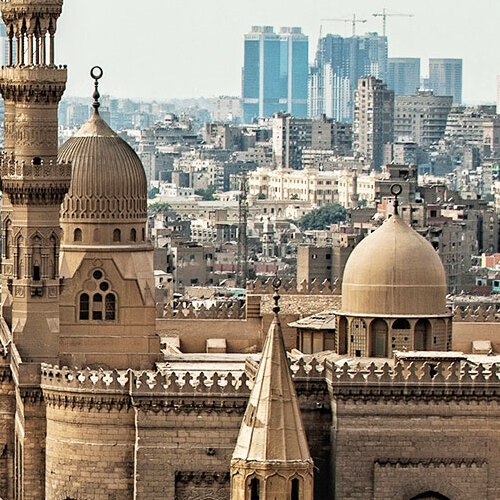
In the heart of Islamic Cairo, where history whispers through ancient alleys, stands the Sabil and Kuttab of Abdel Rahman Katkhuda, a symbolic gem that weaves together the threads of artistry and benevolence. This remarkable edifice, where a fountain and a school coexist harmoniously, stands as a testament to a noble atonement – a commitment to quench the thirst of both body and mind.
The visionary behind this architectural marvel, Emir Abdel Rahman Katkhuda, was a figure known for his lavish lifestyle and decadence. Yet, in the year 1744, he embarked on a journey of redemption, leaving behind a legacy that transcends the boundaries of time. His act of building this structure was a homage to one of the Prophet’s commandments – to provide water for the thirsty and enlightenment for the ignorant.
As you step inside, you’ll be greeted by a visual symphony of ceramic artistry that adorns the interior, a breathtaking testament to the craftsmanship of a bygone era. Each brushstroke and lithograph speaks to a time when art and architecture were inseparable, a fusion that still captivates the soul.
Venturing further down the labyrinthine alleyways, you’ll encounter another jewel – the palace of Amir Bashtak, known as Qasr Bashtak. This rare example of ancient architecture stands as a testament to the enduring spirit of Cairo’s history. While the palace may have undergone renovations and transformations over the years, it still stands proudly, now serving as a concert venue, where echoes of music and history harmonize.
Inside the palace, a small shop beckons, offering a treasure trove of classical Arabic music and other exquisite items, inviting you to take a piece of this rich heritage home with you.
The Sabil and Kuttab of Abdel Rahman Katkhuda, with its fusion of art and benevolence, invites you to traverse the corridors of time and immerse yourself in the legacy of Islamic Cairo. It is a place where the past and present coexist, where artistry and benevolence converge, offering a glimpse into the enduring spirit of Egypt’s cultural heritage.
Created On May 4, 2020
Updated On July 22 , 2025
- Al-Azhar Mosque
- Al-Azhar To The Citadel
- Amir Taz Palace
- Aqsunur’s Mosque
- Bab Zuweila
- Beit Al-Harrawi
- Beit Al-Suhaymi (Al-Suhaymi House)
- Beit Zeinab al-Khatoun
- Bein al-Qasreen STREET (Between The Two Palaces {Street})
- Ben Ezra Synagogue
- Church of St. Barbara
- Coptic Cairo
- Egyptian Textile Museum
- Gawhara Terrace
- Gayer-Anderson Museum
- Ibn Tulun Citadel
- Khan Al-Khalili Bazaar (Cairo’s Most Famous Bazaar)
- Khanqah & Mausoleum of Sultan Baybars al-Gashankir
- Khanqah-Mausoleum of Farag Ibn Barquq
- Madrassa & Mausoleum of as-Salih Ayyub
- Madrassa & Mausoleum of Qalawun
- An-Nasir Mohammed Bin Qalawoon Mosque
- Madrassa And Mausoleum of Barquq
- Mausoleum of Al-Ghouri
- Midan Al-Hussein (Sayedna Al-Hussein Square)
- Mosque of Al-Hakim
- Mosque of Al-Mu’ayyad Shaykh
- Mosque of al-Aqmar
- Mosque of Amr ibn al-As
- Mosque of An-Nasir Mohammed
- Mosque of Aslam al-Silahdar
- Mosque of Ibn Tulun
- Mosque of Mohammed Ali
- Mosque of Sayyidna al-Hussein
- Mosque-Madrassa of Al-Ghouri
- Mosque-Madrassa of Sultan Hassan
- Mosque-Madrassa of Umm Sultan Sha’aban
- Museo Mevlevi
- Museum of Islamic Art
- Northern Cemetery
- Northern Enclosure
- Northern Walls and Gates
- Sabil And Kuttab Of Abdel Rahman Katkhuda
- Sabil of Muhammed Ali Pasha
- Sharia al-Muizz li-Din Allah
- The Church of St Sergius & Bacchus
- The Citadel Of Saladin
- The Complex of Sultan Ashraf Barsbey
- The Coptic Museum (The Only Coptic Museum In Egypt)
- The Egyptian Museum
- The Hanging Church
- The Khayrbek Complex
- The Mosque of Sultan Qaitbey
- The Roman Towers
- Wikala al-Bazara
- Wikala of Al-Ghouri