Cairo Travel Guide
Discover the Heart of Egypt: A Comprehensive Cairo Travel Guide
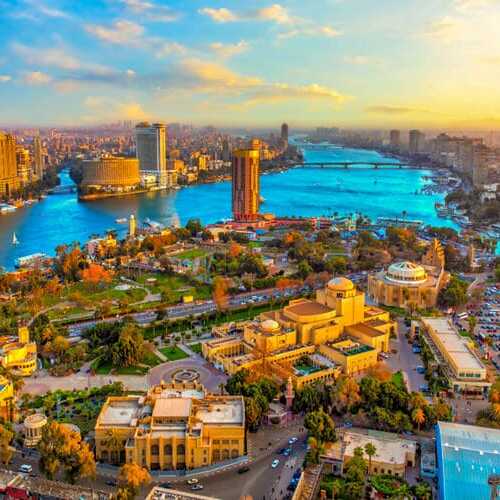
Dive into the essence of Egypt with our enriched Cairo Travel Guide. As the bustling capital city, Cairo stands as a beacon of history, culture, and modernity. It’s not just the largest city in Egypt but a pivotal one on the African continent, and a significant urban center in the Middle East and the Arab world. With the 15th-largest metropolitan area globally, Cairo is a tapestry woven with the threads of ancient civilizations, notably showcased by the majestic Giza pyramid complex and the historic ruins of Memphis nestled within its embrace.
Nestled by the fertile banks of the Nile Delta, the modern silhouette of Cairo was sketched in 969 CE by the visionary Fatimid dynasty. Yet, the land on which today’s city flourishes whispers tales of ancient capitals, their legacy etched in the stones of Old Cairo.
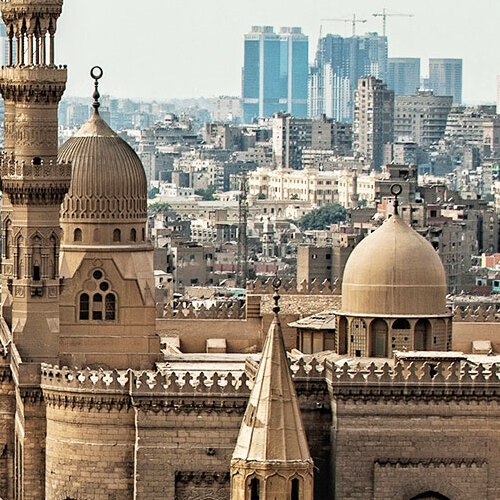
Cairo has forever pulsed as the heart of political and cultural vibrancy in the region, earning the moniker “the city of a thousand minarets” due to its rich tapestry of Islamic architecture. This city is a recognized World City, proudly bearing a “Beta +” classification from the Globalization and World Cities Research Network (GaWC).
Home to over 19 million souls across 3,085 square kilometers, Cairo’s expanse outstrips any other Egyptian city. Its urban sprawl is further augmented by an additional 9.5 million residents living in its vicinity. Yet, amidst its grandeur, Cairo faces the challenges of pollution and congestion, akin to other global megacities.
The Cairo metro system, one of only two in Africa (alongside Algiers, Algeria), is among the world’s busiest, serving over 4 million passengers annually. Economically, Cairo has led the Middle East since 2005 and ranked 43rd globally on Foreign Policy’s 2010 Global Cities Index.
Etymology and the Essence of Cairo
Locally referred to as Maṣr, mirroring the Egyptian Arabic term for Egypt, Cairo’s name underscores its integral role within the nation. Its official name, al-Qāhirah, translates to “the Vanquisher” or “the Conqueror,” a nod to the celestial alignment of Mars, known as “the Conquering Star,” during the city’s foundation. This name also celebrates the arrival of Fatimid Caliph Al-Mu’izz, who established Cairo as a capital upon his arrival from Mahdia. The ancient city of Heliopolis, now the suburb of Ain Shams (“Eye of the Sun”), marks another historical layer of this multifaceted city.
Cairo’s skyline, dotted with the “thousand minarets,” offers a panorama of attractions captivating visitors worldwide. Highlights include the awe-inspiring Pyramids of Giza, the treasure trove of the Egyptian Museum of Antiquities, the architectural marvel of the Step Pyramids at Saqqara, and the historic Citadel of Saladin. The city’s religious heritage is magnificently displayed at the Mosque of Mohamed Ali and the Mosque of Amr Ibn El Aas, the first mosque built in Africa.
The vibrant tapestry of Cairo’s history is further adorned with Coptic Cairo, home to iconic Coptic landmarks like the famous Hanging Church and the Coptic Museum. For a taste of Cairo’s bustling market life, Khan El Khalili stands as the most renowned tourist market globally.
Cairo is also the cradle of the oldest and most influential film and music industries in the Arab world, alongside hosting Al-Azhar University, the world’s second-oldest institution of higher learning. With many international media and organizations setting their regional headquarters here, and the Arab League calling Cairo home for much of its history, the city is a dynamic nexus of global and regional influence.
Explore Cairo, where history and modernity converge, offering a journey through time and an embrace of the new. This city is not just a destination but a vibrant chapter in the story of civilization.
Created On March 18, 2020
Updated On Aug , 2024
- Al-Azhar Mosque
- Al-Azhar To The Citadel
- Amir Taz Palace
- Aqsunur’s Mosque
- Bab Zuweila
- Beit Al-Harrawi
- Beit Al-Suhaymi (Al-Suhaymi House)
- Beit Zeinab al-Khatoun
- Bein al-Qasreen STREET (Between The Two Palaces {Street})
- Ben Ezra Synagogue
- Church of St. Barbara
- Coptic Cairo
- Egyptian Textile Museum
- Gawhara Terrace
- Gayer-Anderson Museum
- Ibn Tulun Citadel
- Khan Al-Khalili Bazaar (Cairo’s Most Famous Bazaar)
- Khanqah & Mausoleum of Sultan Baybars al-Gashankir
- Khanqah-Mausoleum of Farag Ibn Barquq
- Madrassa & Mausoleum of as-Salih Ayyub
- Madrassa & Mausoleum of Qalawun
- An-Nasir Mohammed Bin Qalawoon Mosque
- Madrassa And Mausoleum of Barquq
- Mausoleum of Al-Ghouri
- Midan Al-Hussein (Sayedna Al-Hussein Square)
- Mosque of Al-Hakim
- Mosque of Al-Mu’ayyad Shaykh
- Mosque of al-Aqmar
- Mosque of Amr ibn al-As
- Mosque of An-Nasir Mohammed
- Mosque of Aslam al-Silahdar
- Mosque of Ibn Tulun
- Mosque of Mohammed Ali
- Mosque of Sayyidna al-Hussein
- Mosque-Madrassa of Al-Ghouri
- Mosque-Madrassa of Sultan Hassan
- Mosque-Madrassa of Umm Sultan Sha’aban
- Museo Mevlevi
- Museum of Islamic Art
- Northern Cemetery
- Northern Enclosure
- Northern Walls and Gates
- Sabil And Kuttab Of Abdel Rahman Katkhuda
- Sabil of Muhammed Ali Pasha
- Sharia al-Muizz li-Din Allah
- The Church of St Sergius & Bacchus
- The Citadel Of Saladin
- The Complex of Sultan Ashraf Barsbey
- The Coptic Museum (The Only Coptic Museum In Egypt)
- The Egyptian Museum
- The Hanging Church
- The Khayrbek Complex
- The Mosque of Sultan Qaitbey
- The Roman Towers
- Wikala al-Bazara
- Wikala of Al-Ghouri