Mosque of Aslam al-Silahdar
The Mosque of Aslam al-Silahdar: Cairo's Epitome of Artistic Splendor
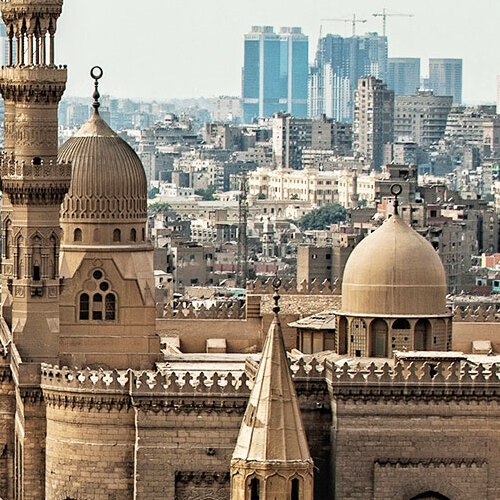
Amid the bustling area near Al-Azhar Park in Cairo, the Mosque of Aslam al-Silahdar stands as a beacon of historical and architectural brilliance. Originating from the 14th century, this mosque is an embodiment of traditional Islamic art, revered for its exceptional dome, a canvas of elaborate tilework, and walls adorned with finely crafted stucco medallions. Each element of the mosque is a tribute to the intricate craftsmanship that characterizes Islamic architecture.
Beyond its spiritual role, the mosque plays a pivotal part in the urban tapestry of Cairo. It is a distinguished landmark near the Bab al-Mahruq entrance of Al-Azhar Park, drawing the admiration of both residents and tourists. The mosque’s blend of historical significance and aesthetic allure establishes it as a central attraction in the area.
Adjacent to this architectural marvel is a gallery that encapsulates the rich tapestry of Cairo’s craftsmanship heritage. This space is dedicated to showcasing and offering the exquisite handcrafted works of local artisans. Each item on display is more than a mere object; it is a narrative of the enduring skills and traditions that have been passed down through generations of Cairo’s craftsmen.
The Mosque of Aslam al-Silahdar transcends its function as a place of prayer. It stands as a vibrant celebration of Cairo’s deep-rooted cultural history and a testament to the city’s ongoing artistic legacy. It invites visitors not only to experience a spiritual sanctuary but also to immerse themselves in the beauty and craftsmanship that have long been hallmarks of Cairo’s identity.
In the heart of a city that is a melting pot of histories and cultures, the Mosque of Aslam al-Silahdar remains a symbol of the enduring beauty and skill that have shaped Cairo’s character. It’s a place where art, history, and spirituality converge, offering a unique window into the soul of one of the world’s most historically rich cities.
Created On March 18, 2020
Updated On July 21 , 2025
- Al-Azhar Mosque
- Al-Azhar To The Citadel
- Amir Taz Palace
- Aqsunur’s Mosque
- Bab Zuweila
- Beit Al-Harrawi
- Beit Al-Suhaymi (Al-Suhaymi House)
- Beit Zeinab al-Khatoun
- Bein al-Qasreen STREET (Between The Two Palaces {Street})
- Ben Ezra Synagogue
- Church of St. Barbara
- Coptic Cairo
- Egyptian Textile Museum
- Gawhara Terrace
- Gayer-Anderson Museum
- Ibn Tulun Citadel
- Khan Al-Khalili Bazaar (Cairo’s Most Famous Bazaar)
- Khanqah & Mausoleum of Sultan Baybars al-Gashankir
- Khanqah-Mausoleum of Farag Ibn Barquq
- Madrassa & Mausoleum of as-Salih Ayyub
- Madrassa & Mausoleum of Qalawun
- An-Nasir Mohammed Bin Qalawoon Mosque
- Madrassa And Mausoleum of Barquq
- Mausoleum of Al-Ghouri
- Midan Al-Hussein (Sayedna Al-Hussein Square)
- Mosque of Al-Hakim
- Mosque of Al-Mu’ayyad Shaykh
- Mosque of al-Aqmar
- Mosque of Amr ibn al-As
- Mosque of An-Nasir Mohammed
- Mosque of Aslam al-Silahdar
- Mosque of Ibn Tulun
- Mosque of Mohammed Ali
- Mosque of Sayyidna al-Hussein
- Mosque-Madrassa of Al-Ghouri
- Mosque-Madrassa of Sultan Hassan
- Mosque-Madrassa of Umm Sultan Sha’aban
- Museo Mevlevi
- Museum of Islamic Art
- Northern Cemetery
- Northern Enclosure
- Northern Walls and Gates
- Sabil And Kuttab Of Abdel Rahman Katkhuda
- Sabil of Muhammed Ali Pasha
- Sharia al-Muizz li-Din Allah
- The Church of St Sergius & Bacchus
- The Citadel Of Saladin
- The Complex of Sultan Ashraf Barsbey
- The Coptic Museum (The Only Coptic Museum In Egypt)
- The Egyptian Museum
- The Hanging Church
- The Khayrbek Complex
- The Mosque of Sultan Qaitbey
- The Roman Towers
- Wikala al-Bazara
- Wikala of Al-Ghouri